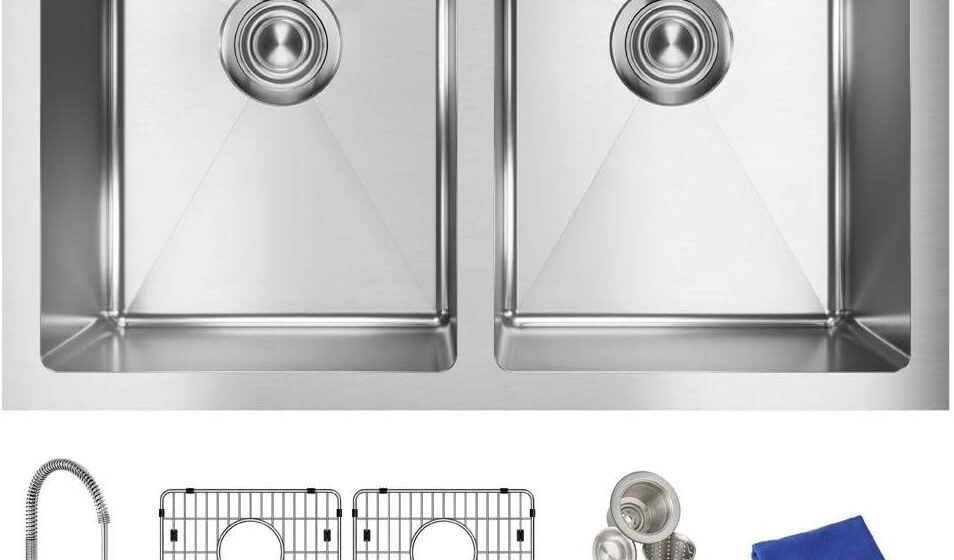
Elkay Crosstown 16 Gauge Stainless Steel 30-3/4″ x 18-1/2″ x 10″ Equal Double Bowl Undermount Sink Kit with Faucet


Elkay Crosstown 16 Gauge Stainless Steel Double Bowl Undermount Sink Kit with Faucet
A kitchen sink is one of those fixtures that quietly shapes how a kitchen feels and functions. It is used constantly, cleaned often, and looked at every single day, which is why the details matter more than they might first appear. The Elkay Crosstown 16 Gauge Stainless Steel 30-3/4″ x 18-1/2″ x 10″ Equal Double Bowl Undermount Sink Kit with Faucet is a complete sink solution that combines a specific installation style, a particular bowl layout, and a defined material specification. This review walks through what the supplied product information actually tells us, and what those details mean in practical terms for a real kitchen.
Design and Build
The defining material here is 16-gauge stainless steel, and specifically Type 304 stainless steel. The manufacturer describes this combination as offering “immense durability, performance and beauty.” That is a stated product claim rather than an independently verified result, but the underlying specification is meaningful: gauge refers to the thickness of the steel, and a lower gauge number indicates a thicker sheet. A 16-gauge sink sits toward the thicker end of what is commonly used in residential kitchen sinks, and the use of Type 304 stainless steel is a recognized material grade in sink manufacturing. Together, these two facts explain why the sink is presented as a durable option rather than a lightweight one.
The overall footprint is 30-3/4 inches wide, 18-1/2 inches front to back, and 10 inches deep. That depth is worth noting on its own. A 10-inch-deep basin gives more vertical room inside the bowl, which can be relevant when soaking larger items or filling tall pots. The dimensions also matter for planning: this is a fairly wide sink, so the cabinet beneath the countertop needs to accommodate both the sink itself and the plumbing that will run behind and below it.
The design language is described as “fresh, geometric,” with straight sidewalls and a flat bottom. Elkay calls this a “tight corners” design. In practical terms, tight corners and straight walls mean the interior of the bowl has fewer curved transitions where residue tends to collect, and the manufacturer explicitly states that this makes the sink “easy to clean.” The flat bottom also contributes to a more modern, squared-off look rather than a traditionally rounded basin.
Features and Technology
Two features stand out in the supplied information: the undermount installation and the sound-deadening treatment.
Undermount installation means the sink is mounted beneath the countertop rather than sitting on top of it with a visible rim. Elkay describes the result as “a seamless appearance between the sink and the countertop.” This is a genuine functional difference, not just an aesthetic one. With no raised rim at the countertop edge, there is no lip for crumbs or water to catch against, and the transition from counter to sink is flush. It also changes the installation process, since undermount sinks are secured from below and require a countertop opening cut to match, along with support for the sink itself.
The second feature is what Elkay calls Sound Guard. The sink includes pads and undercoating that are described as enhancing “sound-deadening performance for a quieter time at the sink.” Stainless steel sinks can be noisy when water hits the bottom or when dishes are set down, and the purpose of this padding and coating is to reduce that noise. The manufacturer presents this as a quieter experience at the sink; the specific reduction is not quantified in the supplied information, so it is best understood as a stated design intent rather than a measured figure.
Performance and Everyday Use
The bowl configuration is an equal double bowl, meaning both basins are the same size rather than one large bowl paired with a smaller one. Elkay frames this as a practical advantage, noting that the bowls can be used “independently for washing, soaking, rinsing, drying and other household tasks.”
That is a fair description of how an equal double bowl tends to function. One side can hold soapy water for washing while the other stays clear for rinsing, or one bowl can be used for soaking a pot while the other remains available for draining pasta. Because the two bowls are equal, neither side is treated as secondary, which suits households where two people are often working at the sink at the same time or where tasks are frequently split between basins.
The trade-off is inherent to the layout: two equal bowls mean each individual basin is narrower than a single large bowl of the same overall width. Large roasting pans or wide baking sheets may not lie flat in either side. That is a natural consequence of the equal double bowl design rather than a flaw, and it is the main reason some kitchens prefer a single bowl or an offset double. For anyone who regularly washes oversized items, this is worth weighing before choosing.
The 10-inch depth, combined with the flat bottom and tight corners, supports the everyday tasks Elkay lists. Soaking is easier with vertical room, and the squared interior means less wasted space in the corners of each bowl compared with a heavily rounded design.
Installation and Kit Considerations
This is sold as a sink kit with a faucet, which means the faucet is included rather than purchased separately. That simplifies planning, since the sink and faucet are supplied together as a matched set. The supplied information does not specify the faucet’s finish, configuration, or features, so those details would need to be confirmed from the listing itself.
Because this is an undermount sink, installation is not a drop-in job. It requires a countertop opening cut to the sink’s dimensions, secure mounting from underneath, and adequate cabinet space for the 10-inch depth plus drainage. The 30-3/4-inch width also means the base cabinet must be wide enough to house the sink and allow the faucet and plumbing connections behind it. Anyone replacing an existing sink should verify that the current cutout and cabinet match these dimensions before committing.
Who Is This Sink Best For?
Based on the stated features, this sink suits a few specific situations. It is a reasonable fit for anyone who wants a two-bowl workflow with equal capacity on both sides, since the equal double bowl design supports splitting tasks between basins. It also suits kitchens where a clean, modern look is a priority, given the tight corners, straight sidewalls, flat bottom, and the seamless appearance that undermount installation provides.
It is also a natural choice for anyone who values a thicker stainless steel specification, since the 16-gauge Type 304 construction is the headline material detail. And because the sink includes Sound Guard padding and undercoating, it is aimed at buyers who want the stated quieter performance at the sink.
Conversely, anyone who frequently washes very large pans or baking sheets may find the equal double bowl layout limiting, and anyone unwilling to deal with the requirements of an undermount installation may prefer a different mounting style.
Final Verdict
The Elkay Crosstown sink kit is defined by a clear set of choices: 16-gauge Type 304 stainless steel, an equal double bowl layout, tight corners with straight walls and a flat bottom, undermount installation, and Sound Guard padding and undercoating. Each of these is a deliberate design decision with practical consequences, and together they point toward a modern, task-friendly sink built around a thicker steel specification.
The main consideration is the bowl layout. Equal double bowls are excellent for splitting washing, soaking, and rinsing between two basins, but they are less accommodating for oversized cookware. The undermount requirement is the other factor to plan around, since it affects countertop cutting and cabinet fit. For buyers whose priorities align with the stated features, this kit presents a coherent package worth considering.
View on Amazon