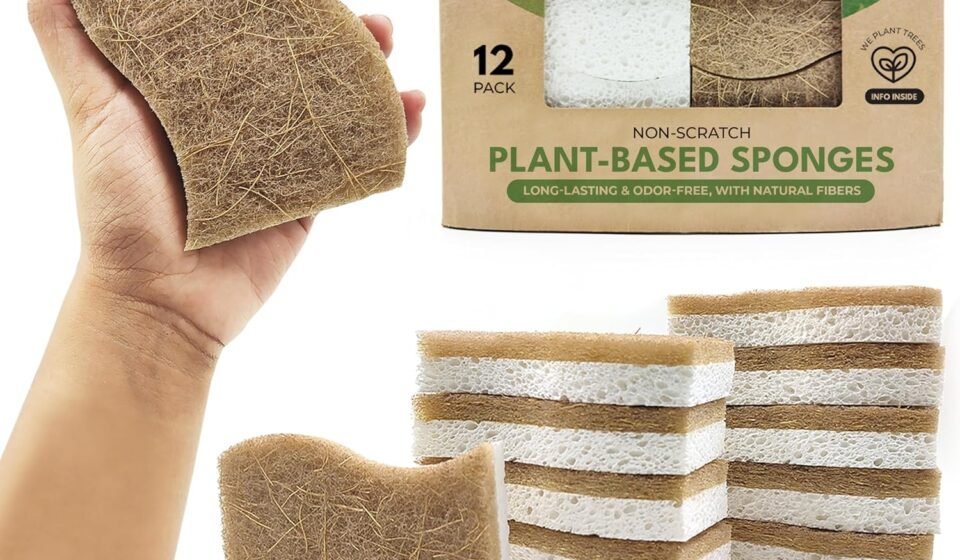
AIRNEX Natural Kitchen Sponges (12 Pack) – Plant-Based Cellulose & Coconut Scrubber Dish Sponges for Kitchen – Eco-Friendly, Non Scratch, Compostable, Non Toxic S-Shaped Natural Sponges for Dishes


AIRNEX Natural Kitchen Sponges (12 Pack): A Plant-Based Approach to Everyday Dish Cleaning
Sponges are one of those kitchen items that most households replace without much thought. They sit by the sink, absorb whatever the day throws at them, and eventually get tossed in the trash. The AIRNEX Natural Kitchen Sponges take a different approach to this everyday task, building a dual-sided cleaning tool around plant-based materials and offering it in a 12-pack. For anyone trying to reduce synthetic waste in the kitchen without giving up scrubbing power, this set is worth understanding in detail.
This review walks through what the AIRNEX sponges are actually made of, how the two cleaning surfaces are intended to work together, and what the stated design claims mean in practical terms. It also covers who these sponges may suit and where their limitations sit, based strictly on the information provided by the manufacturer.
Design and Materials
The AIRNEX sponges use a two-part construction. One side is a cellulose sponge made from plant-based materials, and the manufacturer states the cellulose is FSC Certified. The other side is a coconut fiber scrubber. That combination gives each sponge a soft, absorbent face for wiping and a textured face for loosening stuck-on residue.
The overall shape is described as S-shaped, which is a deliberate ergonomic choice rather than a standard rectangular block. An S-curve tends to sit more naturally in the hand and can make it easier to reach into curved surfaces such as the inside of a glass or the base of a pan. The sponges are also described as thick, which matters for how much water and soap they can hold and how well they stand up to repeated squeezing.
Because the two sides are made from different materials, the sponge is not fully compostable as a single unit. The manufacturer is explicit about this: the cellulose portion can be composted, while the coconut scrubber side should be discarded responsibly. That distinction is important for anyone planning a low-waste routine, since it means the product reduces waste rather than eliminating it entirely.
Features and Cleaning Technology
The core idea behind these sponges is combining gentle cleaning with enough abrasion to be useful. The manufacturer states that the sponges remove grease and grime from surfaces and that they clean effectively without scratching non-stick cookware, glass, or stainless steel. That non-scratch claim is a stated product characteristic, and it is the main reason a coconut-fiber scrubber is appealing as an alternative to harsher scouring pads.
The cellulose side is described as fast-drying thanks to its breathable plant-based construction. This is a meaningful design point because a sponge that dries quickly is less likely to stay damp for long periods, and the manufacturer links that fast drying to odor and grime resistance. The claim is that these sponges stay fresh longer than synthetic kitchen sponges, which is presented as a comparison rather than a measured result.
Durability is addressed as well. AIRNEX describes the sponges as thick and durable, resisting daily wear and lasting for weeks before composting. That timeframe is the manufacturer’s stated expectation, not an independently verified figure, and actual lifespan will depend on how heavily each sponge is used.
Performance and Everyday Use
In practical terms, the two-sided design maps neatly onto how most people actually wash dishes. The cellulose side handles the routine work: wiping plates, glasses, and countertops, and carrying soap and water across a surface. The coconut fiber side is there for the moments that need more pressure, such as dried food on a pan or residue on a sink basin.
The non-scratch claim is what makes this combination broadly usable. Non-stick cookware is easily damaged by abrasive pads, and glass and stainless steel can pick up visible scuffing over time. A scrubber that the manufacturer states will not scratch these surfaces means the same sponge can move from a delicate pan to a sturdy baking sheet without a second tool.
Maintenance is straightforward. The manufacturer recommends rinsing the sponge under running water, squeezing it out, and letting it air dry. That routine supports the fast-drying design and is the main habit that keeps a natural sponge usable between washes. Because the material is plant-based rather than synthetic, the drying step is not just about hygiene but about getting the most life out of each sponge.
Eco-Friendly Positioning and End of Life
The environmental angle here rests on two things: the materials and the disposal instructions. The cellulose comes from plant-based sources and is FSC Certified, and the manufacturer describes the sponges as eco-friendly, non-toxic, and plant-based. At the end of a sponge’s usable life, the cellulose portion can be composted, while the coconut scrubber side needs to be discarded responsibly.
That split disposal is a realistic reflection of how mixed-material products work. It is not a fully compostable sponge, and the manufacturer does not claim otherwise. What it does offer is a way to divert part of the product from landfill and to avoid the synthetic foams and plastics common in conventional sponges. For households already composting, adding the cellulose side to the pile is a simple step.
Who Are These Sponges Best For?
These sponges are a reasonable fit for households that want a plant-based cleaning option without switching to a separate cloth-and-brush system. The 12-pack format suits anyone who prefers to rotate sponges frequently, keeping a fresh one at the sink while others dry.
They are also well matched to kitchens with mixed cookware. Because the manufacturer states the sponges are non-scratch on non-stick, glass, and stainless steel, they can serve as a single tool across a range of surfaces rather than requiring a gentle sponge for some items and an abrasive pad for others.
Finally, they suit people who are mindful of what they send to landfill. The compostable cellulose side and the responsible-disposal instruction for the scrubber give a clearer end-of-life path than a standard synthetic sponge, even if the product is not entirely waste-free.
Final Verdict
The AIRNEX Natural Kitchen Sponges are a thoughtful take on a mundane item. The combination of FSC Certified cellulose and a coconut fiber scrubber gives each sponge two distinct functions, and the S-shaped, thick build is designed for comfortable handling and repeated use. The manufacturer’s stated non-scratch performance across non-stick, glass, and stainless steel is the feature that makes the set broadly practical, while the fast-drying, odor-resistant claims address the most common complaint about kitchen sponges.
The main caveat is the mixed-material construction. Only the cellulose side is compostable, so the scrubber still needs to be discarded responsibly. And the “lasts for weeks” figure is the manufacturer’s expectation rather than a guarantee, with real-world lifespan depending on use.
For anyone looking to move away from synthetic sponges while keeping a genuinely useful scrubber on hand, this 12-pack offers a plant-based option with a clear, if partial, path back to the compost pile.
View on Amazon